

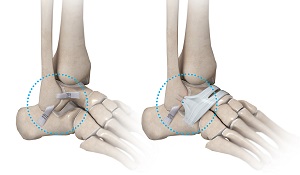
What is Ankle Stabilization?
Ankle stabilization is a medical or surgical treatment used to restore stability to the ankle joint when it becomes weak or repeatedly gives way due to ligament injury.
The ankle is stabilized mainly by ligaments such as the anterior talofibular ligament (ATFL) and calcaneofibular ligament (CFL). When these ligaments are torn or stretched (commonly after repeated ankle sprains), the ankle can become unstable.
When is Ankle Stabilization Indicated?
Ankle stabilization is commonly recommended for:
- Recurrent ankle sprains
- Chronic ankle instability
- Torn or stretched ligaments (especially the ATFL and CFL)
- Persistent pain, swelling, or “giving way” sensation
How Should I Prepare for Ankle Stabilization?
Preparation for ankle stabilization includes a detailed medical evaluation and imaging to assess ligament damage. Inform your doctor about medications and stop blood thinners if advised. Stop smoking to improve healing. Arrange for post-surgery support and mobility aids. Follow fasting instructions before surgery. Begin preoperative strengthening exercises if recommended to improve recovery outcomes.
What Should I Expect During Ankle Stabilization?
Ankle stabilization treatment involves restoring strength and stability to a weakened or unstable ankle joint caused by ligament injury. This may involve:
Non-Surgical Treatment (First Line)
- Rest, ice, compression, and elevation (RICE)
- Ankle bracing or taping for support
- Anti-inflammatory medications
- Physiotherapy to strengthen the surrounding muscles and improve balance
- Proprioception (balance) training to prevent recurrent sprains
Surgical Treatment (If Conservative Care Fails)
If instability persists due to torn ligaments, commonly the ATFL and CFL, surgery may be recommended.
During ankle stabilization surgery, you will receive regional or general anesthesia so you won’t feel pain. The surgeon makes a small incision over the outer ankle to access the damaged ligaments. In a repair procedure, the Broström procedure is usually performed, where the stretched ligaments are tightened and secured with sutures or anchors. In reconstruction, a tendon graft may be used to rebuild the ligament. Sometimes arthroscopy is performed to address associated problems. The incision is then closed, and a dressing is applied. The procedure typically takes 1–2 hours.
What Happens After Ankle Stabilization Procedure?
After ankle stabilization, your ankle is placed in a splint or cast to protect the repaired ligaments. Pain, swelling, and mild discomfort are common and managed with medications. Weight-bearing is usually restricted for a few weeks. Stitches are removed after about 10–14 days. Gradual physical therapy helps restore strength, balance, and mobility. Full recovery typically takes 3–6 months, depending on healing and rehabilitation.
What are the Risks and Benefits of Ankle Stabilization?
Benefits
- Restores ankle stability
- Reduces repeated sprains and “giving way” episodes
- Relieves chronic pain and swelling
- Improves balance and walking confidence
- Helps return to sports and daily activities
- Long-term success is high, especially with procedures like the Broström procedure
Risks
- Infection
- Bleeding or blood clots
- Nerve irritation or numbness
- Stiffness or reduced ankle motion
- Persistent pain or swelling
- Recurrent instability (rare)
- Delayed wound healing
Most complications are uncommon, and proper rehabilitation greatly improves outcomes.
For more information about our services or to schedule an appointment, call us at or click here to request an appointment online. We’ll respond to you as soon as possible.